
Platelet-Rich Plasma Therapy (PRP)
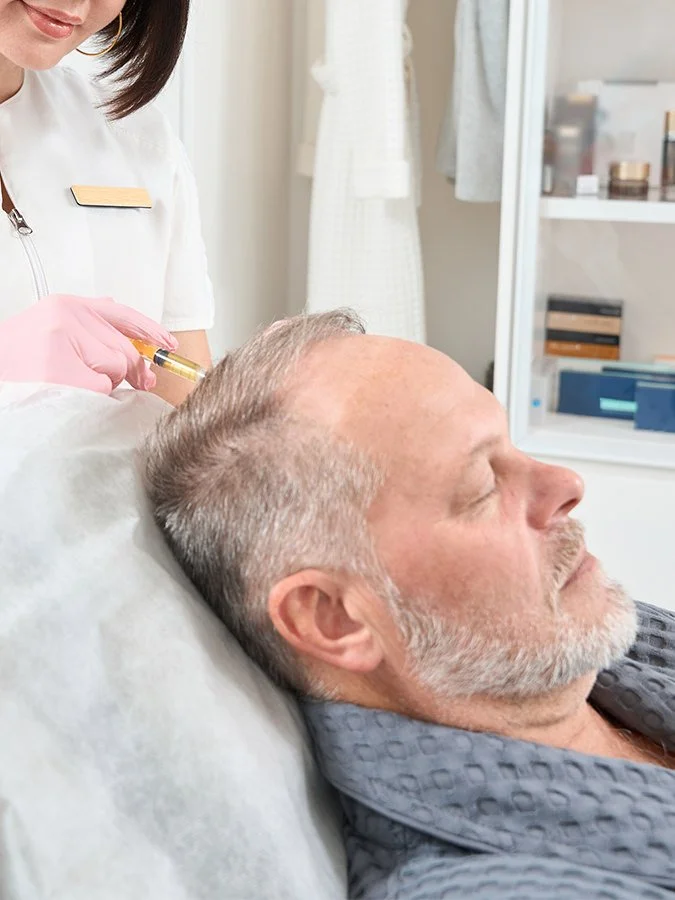
What is Platelet-Rich Plasma Therapy (PRP)?
PRP uses a small sample of your own blood. After a sterile blood draw, the sample is spun in a centrifuge to concentrate the platelets, which contain growth factors involved in the skin’s natural repair process. The concentrated plasma is then injected, or applied during medical microneedling, in the area being treated.
At Luníc, every PRP treatment is assessed and performed by Reine Jeha, RN, BScN, Aesthetic Nurse Injector. Learn more about Reine.
Who PRP may be suited for
PRP uses a preparation made from your own blood. Whether it is appropriate depends on your concern, the available evidence and your medical history. It may be discussed during your consultation for:
skin texture, fine lines and dullness on the face, neck and décolleté;
thin, crepey skin under the eyes;
thinning hair on the scalp, after an assessment of the possible causes;
the appearance of acne scars, usually combined with microneedling.
PRP can be injected, or applied during medical microneedling. These are two different procedures, and the expected benefits, limitations and alternatives of the one proposed to you are discussed before treatment.
PRP is not the right choice for everyone, and it is not a substitute for a medical assessment of hair loss. Reine will tell you honestly if another option, or a referral to a physician, is more appropriate.
When PRP may be unsuitable or need to be postponed
PRP may not be suitable, or may need to be postponed, if you:
have a blood or platelet disorder, or take blood-thinning medication;
have an active skin infection, cold sore or open wound in the area;
are pregnant or breastfeeding;
are undergoing cancer treatment, or have a condition affecting your immune system;
have had a recent illness or fever.
Tell Reine about your medical conditions, medications and supplements, and whether you are pregnant or breastfeeding. This list is not exhaustive: your intake form and consultation are used to assess whether PRP is appropriate for you and to discuss your individual risks. No procedure is risk-free.
What to expect on the day
Assessment: review of your goals, medical history and the area to treat.
Blood draw: a small sample is taken from your arm, as in a routine blood test.
Preparation: the sample is processed immediately in a centrifuge.
Comfort: a topical numbing cream is applied to the face or scalp.
Treatment: the PRP is injected or applied with medical microneedling.
Aftercare: you leave with written aftercare instructions.
Plan for about one hour to an hour and a half for the full appointment.
Frequently Asked Questions
-
Improvement is not guaranteed. If changes occur, they appear gradually, and their timing, extent and duration vary from person to person and with the treatment approach. Reine will explain what is realistic for you during your consultation.
-
PRP is usually planned as a series, spaced several weeks apart. The number of sessions depends on your skin or hair, the area treated and your goals, and is determined at your assessment.
-
The blood draw, injections and microneedling can cause some discomfort, such as stinging or pressure. A topical numbing cream can be applied to the face or scalp, and comfort measures are adapted to the area treated.
-
After microneedling, redness similar to a sunburn is common for 24 to 48 hours. After injections, mild tenderness, swelling or bruising may last a few days.
-
You will receive written aftercare instructions specific to your procedure, including when you can wash the area, exercise, go in the sun and use skincare products. Some anti-inflammatory medications may be discouraged for a period after treatment; Reine will tell you which ones. Never stop or change a prescribed medication without advice from the prescribing clinician. Contact the clinic if you notice anything unusual after your treatment.
-
Using your own blood lowers the risk of an allergic reaction to the plasma itself, but it does not eliminate treatment risks. As with any injection or microneedling, possible effects include redness, swelling, bruising, tenderness and infection. Risks depend on the technique, the area treated and any other product used, and are reviewed with you before you give consent.
-
Yes. PRP is often combined with medical microneedling. Other combinations are discussed during your assessment.
-
Your first visit includes an assessment. You can also book a complimentary consultation with Reine if you would like to discuss your options before deciding.